

Why is Hochul insurance reform a problem according to NY Streetsblog?
East NY feels like LA in regards to traffic, yet this is all relative right!?
If you believe healthcare is a collective right, why treat transportation injury as an individual fault? The principle is the same: we pool risk to protect the vulnerable. Yet, in the realm of “street safety,” a curious dissociation occurs. Among certain left-adjacent advocates, solidarity seems to end where the bicycle lane begins. I call this mullet socialism: publicly progressive in policy, privately transactional in practice—all collectivist theory in the front, all libertarian coping in the back.
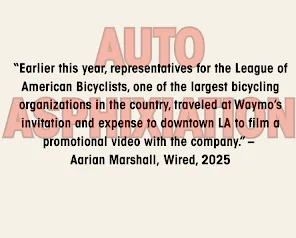
The phenomenon reveals itself in strange alliances. The same movements that rhetorically champion the working class often oppose no-fault insurance reforms, instead upholding a system that benefits market-based personal injury lawyers—a truly regressive form of “justice.” Meanwhile, their activism is frequently bankrolled by the very capitalist excess they decry: tech oligarchs, gig-economy platforms, and small (and large) exploitative businesses. Streetsblog’s outrage at Uber’s support for Governor Hochul’s insurance reform is a case in point. Uber sponsors countless bicycle initiatives, including the League of American Bicyclists. The reform proposed by Hochil is itself is endorsed by the National Action Network and the Korean Association of Queens, and others —organizations deeply rooted in communities hypersegregated, marginalized, and denied the social contract. Why the selective outrage?
This isn’t about empowering cars. It’s about recognizing that for poor, historically excluded communities, car ownership is often a brutal necessity, not a luxury. When auto insurance averages $4,000 a year in New York, $1,500 above the national average, that is a crushing cost-of-living burden. Hochul’s agenda aims to lower that burden by curbing fraudulent claims and limiting lawsuit abuse, directing savings back to consumers.
The ideological mullet is in full view here: the left part professes universal care; the right part clings to a punitive, individualized litigation model for crash victims. We must ask, who does this really serve? When we advocate for streets, we must advocate for a social contract that includes all who use them, not just those who can afford the premium of principle.